



Understanding Glaucoma Eye Drop Bottle Colors and Why They Matter
If your doctor prescribes you medication for glaucoma, you may notice that the bottle tops come in different colors. The colors of these glaucoma eyedrop bottles are not just for branding. They are part of a standardized system designed to enable patients and eye care providers to recognize different classes of glaucoma treatments easily. This color-coding helps to cut down on confusion, particularly for those people who use various eye drops every day.
Eye care specialists often use a glaucoma eye drop color chart to show how different drugs work to lower eye pressure. The color of the bottle is an aid in identifying the type of medication, but patients should still read the label carefully, as generic manufacturers may vary somewhat in design.
If you are in Sherman, Allen, or McKinney, Texas, engaging with a glaucoma specialist in North Texas will help you understand your prescriptions and how to use them properly to protect your eyesight.
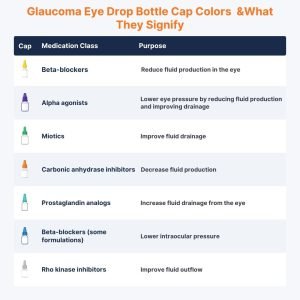
Colors of Glaucoma Eye Drop Bottles and What They Signify
Different cap colors indicate different kinds of drugs that assist in decreasing intraocular pressure. Knowing these colors can really make the management of your treatment much easier.
| Bottle Cap Color | Medication Class | Purpose |
| Yellow | Beta-blockers | Reduce fluid production in the eye |
| Purple | Alpha agonists | Lower eye pressure by reducing fluid production and improving drainage |
| Green | Miotics | Improve fluid drainage |
| Orange | Carbonic anhydrase inhibitors | Decrease fluid production |
| Teal | Prostaglandin analogs | Increase fluid drainage from the eye |
| Blue | Beta-blockers (some formulations) | Lower intraocular pressure |
| Gray | Rho kinase inhibitors | Improve fluid outflow |
This glaucoma eye drop color chart is a useful resource, but your ophthalmologist will tell you what medication is right for your particular situation. Don’t change drugs based on bottle color alone without checking with your provider.
How Do I Use My Glaucoma Eye Drops?
Taking your medications correctly is just as crucial as getting the right prescription. The key to successful treatment of glaucoma in Texas is constant usage of prescribed eye drops.
Here are some essential tips:
- Put in eye drops after washing your hands.
- Tilt your head back. Pull down the lower eyelid gently.
- Keep your eye away from the bottle’s tip. Put one drop in the eye.
- Gently close your eyes for a minute or two.
- If taking more than one medicine, wait at least five minutes between drops.
- Follow the manufacturer’s guidelines for how to store medicines.
Patients frequently consult with an eye doctor for glaucoma in North Texas after inadvertently skipping doses or using drops incorrectly. Proper technique ensures the medicine works properly and reduces negative effects.
If you are uncertain about your treatment plan, a complete glaucoma evaluation might include counseling on medications and a demonstration of the proper method of administration.
Common Mistakes to Avoid When Using Drops
Many people unintentionally make their treatment less effective by doing things they could have avoided.
Some common mistakes are:
- Frequent missed dosages
- Confusion of drugs due to identical seeming bottles
- Touching the tip of the bottle to the eye, which raises the risk of getting an infection
- Using expired medicine
- Stopping treatment when vision becomes steady
- Not getting a medication renewed before it runs out
To make your medication plan easier, a glaucoma specialist in North Texas can help. They can also answer your questions about glaucoma eye drop bottle colors if you are given more than one.
It’s also important to keep your follow-up visits. Glaucoma often gets worse without any obvious symptoms, so it’s important to monitor it regularly.
Why is it important to get regular glaucoma care in North Texas?
Glaucoma is sometimes called the “silent thief of sight” because people can lose their sight permanently before they even know they have it. The best ways to keep your sight are to get an evaluation early and keep getting care.
If you live in Sherman, Allen, McKinney, or any of the nearby North Texas cities, you should get regular eye exams. This way, your ophthalmologist can check your eye pressure, look at your optic nerve, and make any necessary medication changes.
A comprehensive glaucoma evaluation usually includes:
- Measurement of eye pressure
- Examining the optic nerve
- Testing the visual field
- The OCT scan
- Review of medications
- Customized planning of treatment
Early detection helps patients to start glaucoma treatment in Allen Texas before serious visual loss occurs. If your current medications are not regulating your eye pressure, your ophthalmologist may offer laser or surgical treatment alternatives.
Expert Glaucoma Care at Texoma Retina in Allen, TX
Understanding glaucoma eye drop bottle colors is just one piece of the puzzle in terms of protecting your vision. Our skilled specialists at Texoma Retina in Sherman, TX, offer tailored glaucoma treatment to patients throughout Sherman, Allen, McKinney, and North Texas. Our team is dedicated to helping you preserve your vision, from extensive diagnostic testing and medication management to long-term monitoring. Texoma Retina is here to deliver compassionate, evidence-based treatment personalized to you, whether you need a Comprehensive glaucoma evaluation, assistance with your medications, or regular care from a trusted eye specialist for glaucoma in North Texas.
FAQs:
Q1) Why are glaucoma eyedrop bottles different colors?
Bottle caps are color coded to indicate the different classes of glaucoma drugs to help patients and health care professionals tell them apart.
Q2) Can I Identify My Glaucoma Medicine By The Color Of The Bottle?
No. The color of the cap indicates the class of drug, but always check the name of the medication on the label before you use it.
Q3) What if I forget a dose of my glaucoma eye drops?
Take the missing dose as soon as you remember, unless it is almost time for the next dose. Do not double the dose unless your doctor tells you to.
Q4) How often should glaucoma patients have follow-up appointments?
The schedule varies based on the severity of the condition and the response to treatment. Most patients need to visit the doctor 3 to 6 times a month.
Q5) When to See a Glaucoma Specialist in North Texas
If you have high eye pressure, a family history of glaucoma, or visual abnormalities, or have been diagnosed with glaucoma, arrange for an evaluation with a glaucoma specialist soon.