



Medications
Glaucoma Medications in Texas
Glaucoma Medications in North Texas
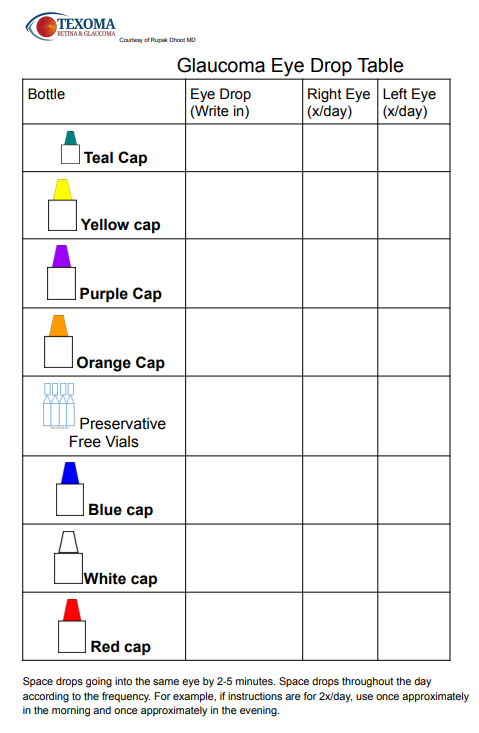
At every appointment, we ask that you either bring your glaucoma drops or memorize the color caps that you are using and how many times a day.
Below are a list of some of the medications available and the color caps you may find them in.
Prostaglandins – Turquoise cap
Latanoprost
Bimatoprost
Travoprost
Tafluprost
Beta Blockers – Yellow or blue cap
Betaxolol
Timolol/Timolol
Carteolol
Alpha adrenergic agonists – purple cap
Brimonidine
Apraclonidine
Carbonic Anhydrase Inhibitors – orange cap
Dorzolamide
Brinzolamide
Acetazolamide (Pill)
Methazolamide (Pill)
Rho-kinase Inhibitor
Rhopressa – White cap
Combination Drugs
VYZULTA® – turquoise cap
ROCKLATAN® – White cap
Cosopt – Blue cap
Combigan – Blue cap
Why Does Eye Pressure Matter?
Eye pressure, or intraocular pressure (IOP), is an important feature of glaucoma care. High or long-lasting pressure inside the eye might stress the optic nerve and raise the chance of gradual loss of eyesight. Regular checkups let your eye doctor see if your current treatment is working to control your eye pressure.
Glaucoma medications are usually prescribed to decrease IOP and prevent further damage to the optic nerve. Your doctor may prescribe one or a mix of drugs, based on your diagnosis and treatment goals. Eye drops for glaucoma should be used regularly because glaucoma can progress without obvious symptoms in the early stages.
Your eye pressure can alter over time; thus, your therapy may need to be changed during follow-up appointments. “Bring your medications to every appointment so your doctor can confirm exactly what you are using, how often you are using it, and if changes are needed”.
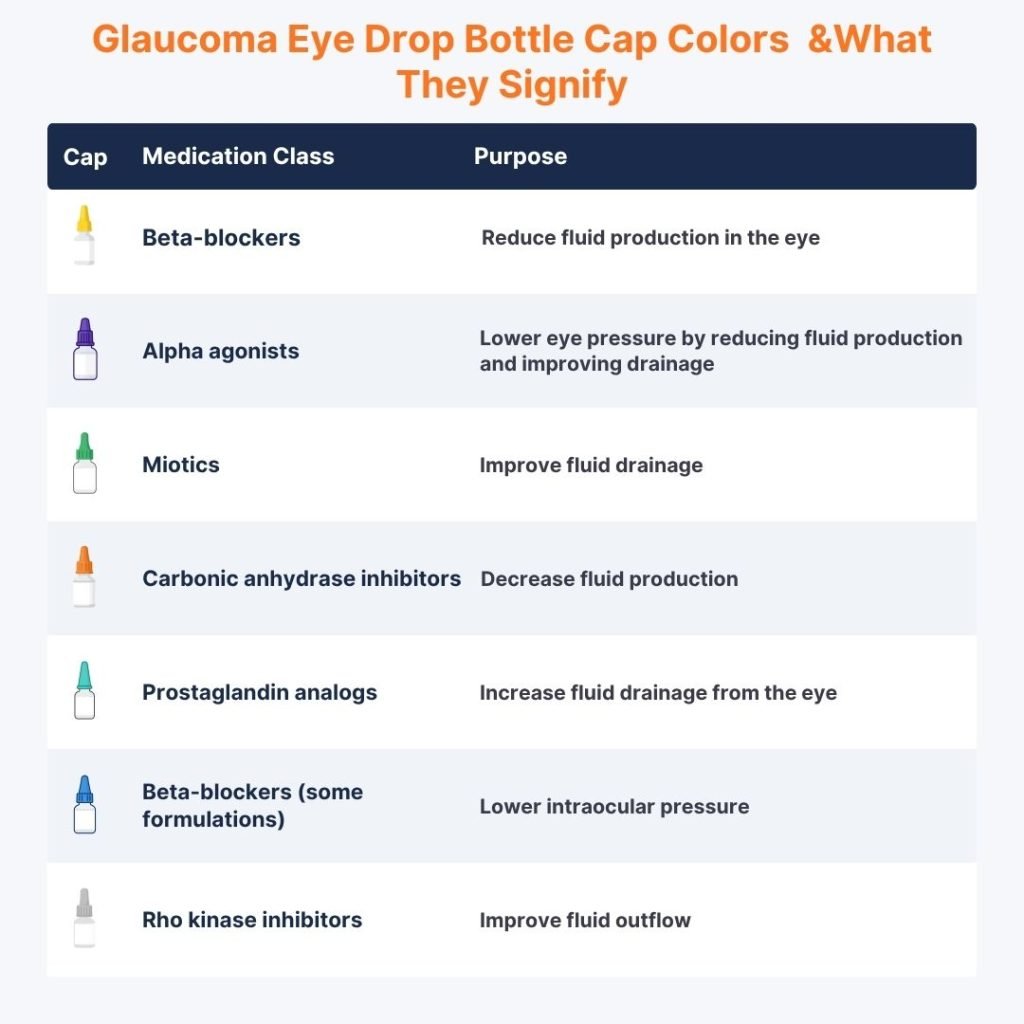
Understanding Eye Drop Cap Colors
Different medications used for glaucoma treatment may have different colored caps on the bottles. These colors can assist patients and physicians in identifying prescriptions, but cap colors can vary by manufacturer and should not be the sole method for identifying a prescription.
Knowing the prescription name, dose, and how many times you take it each day will help while you are using prescription eye drops for glaucoma. Having a current prescription list on your phone or carrying the bottles with you to your visit might help avoid confusion—especially if many eye drops are prescribed.
There are a few different types of glaucoma medications. Some reduce the amount of fluid produced in the eye, while others increase the outflow of that fluid. The medicines your expert picks for you will depend on several things. These include the pressure in your eye, the kind of glaucoma, the general health of your eye, how you respond to therapy, and your unique situation.
A glaucoma drug list can help you keep track of your medicines, but it shouldn’t replace what your eye doctor tells you to do. Never stop, restart, or vary the frequency of a glaucoma treatment without discussing it with your physician.
When Medications Are Not Enough?
For many people, using eye drops regularly is the best way to keep their eye pressure under control. Medications may not always be enough to control blood pressure, though. Some patients may have side effects, trouble using the drops, not enough pressure reduction, or worsening glaucoma despite treatment.
If these things happen, your doctor may talk to you about other glaucoma treatment options. Depending on your situation, these options may include laser treatment or surgery to help drain fluid and lower your eye pressure.
Each person makes their own choice about whether to stop taking medicine. Before suggesting a different treatment, your doctor will look at how serious your glaucoma is, the health of your optic nerve, your current eye pressure, how well the treatment is working, and your personal situation.
Frequently Asked Questions
Some common medicines used to treat glaucoma are prostaglandin analogs, beta blockers, alpha agonists, and carbonic anhydrase inhibitors. Some medicines work by helping the eye drain more fluid, while others stop the eye from making it. Your doctor will figure out which medicine is best for you based on your condition.
Glaucoma eye drops lower intracranial pressure by either stopping the eye from making fluid or making it easier for that fluid to drain. The exact way it works depends on the medicine that was given.
Side effects are different for each drug. Some people may have burning, stinging, redness, blurred vision, or changes around the eyes for a short time. Some medicines can also have effects that aren't just in the eyes. Do not wait to tell your doctor about any new or long-lasting symptoms.
How often depends on the medicine you're taking and your treatment plan. If you only need to use some drops once a day, you may need to do so more often. Do what your prescription says and don't change the plan without first talking to your eye doctor.
Yes. Many people with glaucoma can control it with prescription drugs, close monitoring, and sometimes laser treatment. However, if these methods don't work to lower eye pressure enough or if glaucoma keeps getting worse, surgery may be part of the patient's custom treatment plan.
Request an
Appointment
Opening Hours
Calls are taken 24/7 for emergencies
Available on Saturday and Sunday for Emergency only. Call for appointment
LOCATIONS AND DIRECTIONS