



Posterior Vitreous Detachment
Posterior Vitreous Detachment in Texas
Posterior Vitreous Detachment Care at Texoma Retina
Sudden bursts of light or new floaters in your eyesight might be scary. These symptoms are typically connected with posterior vitreous detachment (PVD), a common age-related eye disorder that occurs when the vitreous gel inside the eye pulls away from the retina.
Posterior vitreous detachment occurs when the vitreous gel separates from the retina, a common age-related change. The problem is usually not sight threatening, but timely evaluation is needed. While most cases of PVD do not affect vision, some can lead to retinal tears or retinal detachment.
At Texoma Retina, our professional retina specialist in Sherman Texas can evaluate signs of the PVD eye condition, including flashes, floaters, and other symptoms. We use state-of-the-art retinal imaging and comprehensive dilated eye exams to catch potential issues early and protect your vision.
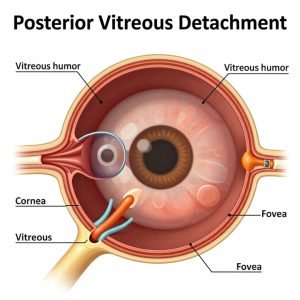
What Is Posterior Vitreous Detachment (PVD)?
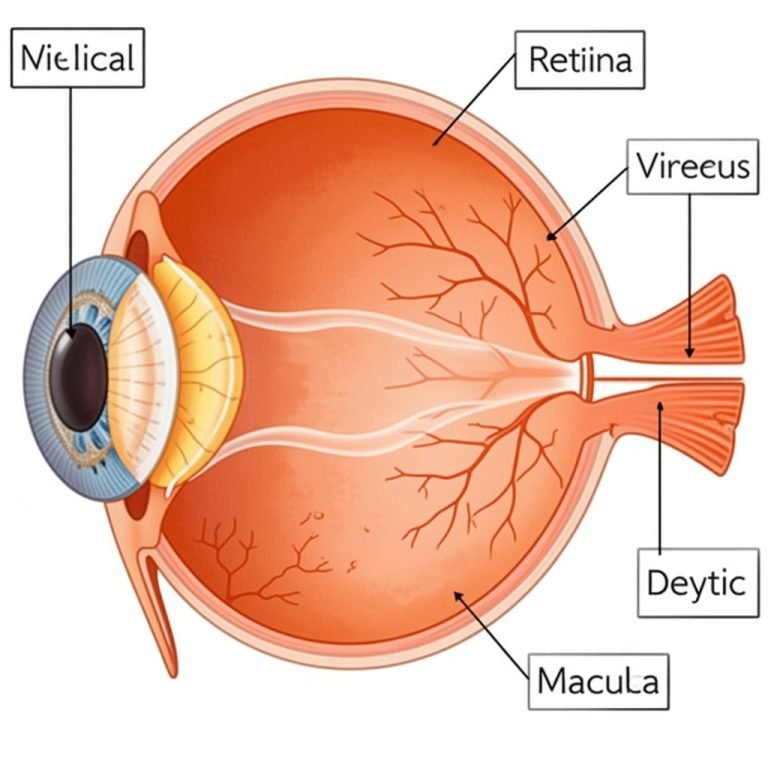
The vitreous is a translucent gel-like material that fills the inside of your eye and helps to give it its form. As we age, the vitreous gets more liquid and may pull away from the retina.
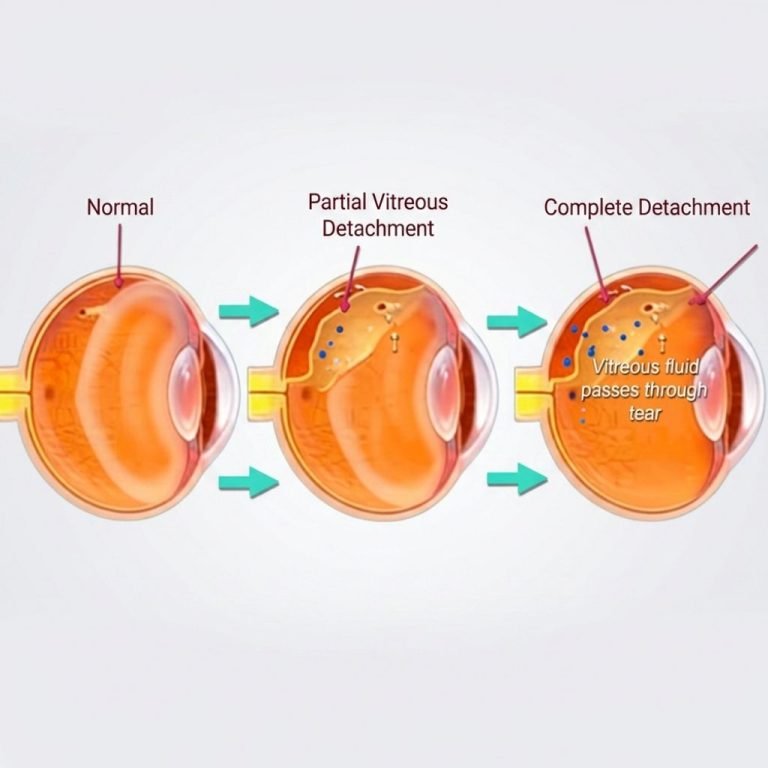
This natural separation is called a posterior vitreous detachment (PVD).
The PVD eye condition is a normal part of getting older, but occasionally the separation process can pull on the retina. In some instances this traction may cause a retinal tear, which may require urgent treatment to prevent a retinal detachment.
A comprehensive dilated retinal examination is important when new symptoms develop, even if the symptoms appear mild.
Symptoms of PVD
Many people develop symptoms immediately, generally in one eye. The most common symptoms of PVD are the following:
- Floaters appearing suddenly
- Flashes of light in the periphery of vision
- Web-like shadows or dots moving across vision
- Vision changes that need quick examination
Additional PVD symptoms may include:
- Tiny black dots moving over the sight
- Floaters shaped like rings
- Random lights, especially when it’s dark
- Mild blurred vision early in the course of symptoms
These symptoms are usually due to posterior vitreous detachment but can potentially be a sign of retinal tear or retinal detachment.
When Should You Worry About Eye Flashes and Floaters?
Having eye flashes and floaters occasionally is normal as we get older. But if you suddenly see more flashes and floaters in your eyes, especially if they are accompanied by a curtain-like shadow or loss of vision, you should see a doctor right away.
Do not ignore:
- A sudden shower of floaters
- Lots of bright lights
- Lack of side vision
- A dark curtain blocking some of your view
These signs may indicate that the retina is damaged and requires immediate evaluation. Get the right evaluation and eye floater treatment in Sherman TX with our experienced doctors for better vision.
Risk of Retinal Tears
PVD is common as people age, but a retinal tear can also happen when the vitreous separates.
A tear can happen when the fluid pulls too hard on the retina. Then, fluid could get through the tear and lift the retina off the back of the eye, which is called retinal detachment.
Some possible retinal tear symptoms include:
- Sudden increase in floaters
- Persistent flashes of light
- Blurred vision
- Shadow or curtain over part of the visual field
- Sudden decrease in vision
If you notice the signs of a retinal tear early, you can get treatment before you lose your sight permanently. Immediate evaluation is recommended if symptoms suddenly worsen.
How Is Posterior Vitreous Detachment Diagnosed?
An experienced specialist must do a full evaluation of the retina in order to make a correct diagnosis.
At Texoma Retina, the following may be part of your exam:
- Full examination of the dilated retina
- Optical Coherence Tomography (OCT)
- Wide-field imaging of the retina
- Checking carefully for retinal tears or detachment
Our retina specialist for posterior vitreous detachment Sherman TX closely checks to see if the separation of the vitreous has caused any problems with the retina that need to be treated.
Early detection helps people with PVD feel more secure and allows doctors to respond quickly if retinal damage occurs.
Posterior Vitreous Detachment Treatment
For many patients, posterior vitreous detachment treatment mainly involves regular follow-up exams.
As the brain adjusts and the vitreous settles, most floaters become less noticeable over time.
But if a tear in the retina is found, treatment should not be put off. Laser therapy or cryotherapy may be suggested to close the tear and lower the chance of the retina coming off.
Based on your retinal exam and symptoms, your eye doctor will decide on the best posterior vitreous detachment treatment for you.
Posterior Vitreous Detachment Treatment in Texas
If you start having new floaters or flashes, you need to see a doctor right away.
Patients with posterior vitreous detachment and other retinal disorders can get expert PVD treatment in Sherman, TX, at Texoma Retina.
At PVD treatment in Sherman TX includes ongoing monitoring to find retinal tears early and save vision when intervention is needed, even though many cases only need to be watched.
When Should You Schedule an Eye Examination?
- Do not ignore sudden flashes or a shower of new floaters.
- Early evaluation can help identify retinal tears before they progress to retinal detachment.
- Schedule a retinal examination promptly if you experience new visual symptoms.
- Prompt diagnosis can make a significant difference in protecting your long-term vision.
Why Choose Texoma Retina?
Texoma Retina specializes in the advanced diagnosis and management of posterior vitreous detachment in Sherman, Allen, McKinney, Gainesville and neighboring North Texas cities.
Our fellowship-trained retina specialists analyze flashes and floaters and other retinal disorders using modern imaging equipment.
If you have simple PVD or need a retinal tear treated, our experts will give you personalized retinal care using evidence-based procedures and state-of-the-art diagnostic technology.
If you are seeking for a reputable retina specialist in Sherman Texas, Texoma Retina is dedicated to protecting your eyesight with fast diagnosis and excellent retinal care.
Our expert retina specialist for posterior vitreous detachment in Sherman TX helps people identify the safest care approach for their unique ailment.
Frequently Asked Questions
Posterior Vitreous Detachment (PVD) is an age-related condition that develops due to changes to the vitreous gel of the eye.
The symptoms of PVD include flashes and floaters that usually last one to three months. In the majority of patients, the presence of flashers and floaters subsides within three months of the onset of PVD. Flashes and seen if there are strands of light that may be seen when looking at an object. Floaters are present if there are dots that are seen when looking at an object. PVD does not normally affect vision. However, in severe cases, there may be a risk of retinal tears, vitreous hemorrhage, or retinal detachment, which may contribute to vision loss.
In most cases of PVD, patients do not require treatment. Severe cases of PVD may require laser cryopexy (freezing the damaged portions of the retina) or surgery (lasering the damaged portions of the retina) to correct retinal tears or retinal detachments. Therefore, it is important to routinely receive eye checkups when symptoms of PVD first begin.
In most cases, medical treatment is not needed and they are followed over time. Treatment is only necessary if complications arise such as retinal tears or retinal detachment.
Sudden flashes of light, a dramatic increase in floaters, blurred vision or any shadow or curtain blocking your vision should make you make an appointment for an evaluation immediately. Seeing a doctor sooner, rather than later, may help you save your vision.
Request an
Appointment
Opening Hours
Calls are taken 24/7 for emergencies
Available on Saturday and Sunday for Emergency only. Call for appointment
LOCATIONS AND DIRECTIONS