



Central Serous Retinopathy
Central Serous Retinopathy Treatment Texas
Expert CSR Care at Texoma Retina
Central Serous Retinopathy (CSR) or Central Serous Chorioretinopathy (CSCR) is a disorder of the retina that can produce rapid blurring and distortion of central vision. Some cases will resolve on their own, but some individuals will need specialist care to prevent long-term visual impairments. At Texoma Retina, we provide advanced central serous retinopathy treatment using state-of-the-art retinal imaging and personalized management plans for patients across North Texas.
Our retina specialists have a wealth of experience in the diagnosis and monitoring of retinal fluid disorders from their fellowship training. If your symptoms are recent or have returned, an early assessment helps to establish the most appropriate treatment and preserve your vision.
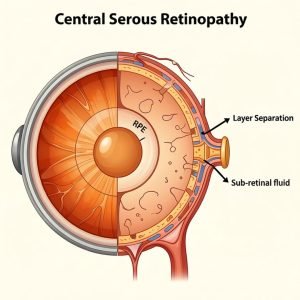
What Is Central Serous Retinopathy?
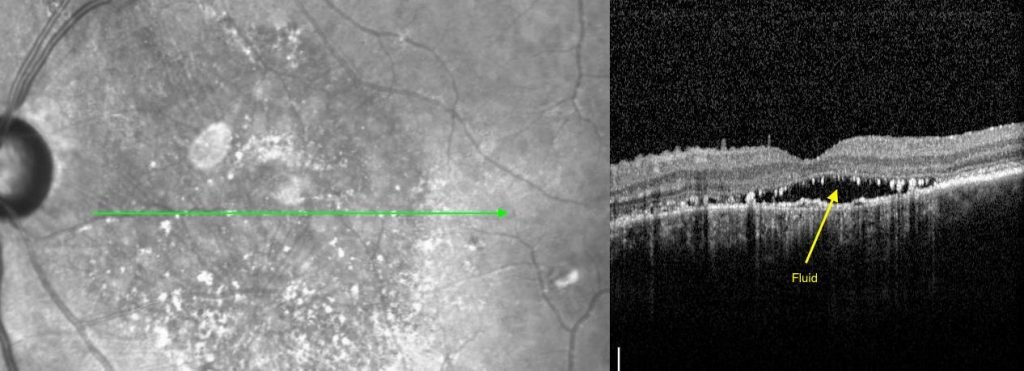
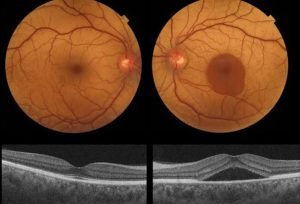
Central serous retinopathy is when fluid escapes under the retina and pools under the macula. The macula provides clear center vision needed for activities such as reading, driving, and identifying faces. Fluid buildup in this location can distort or impair eyesight.
It is commonly connected with stress, corticosteroid use, and hormonal changes. Most cases are self-limiting, but some may require medical or laser therapy. Some retinal disorders can have identical symptoms; thus, a thorough eye examination is crucial for an accurate diagnosis.
Signs of Central Serous Retinopathy
The symptoms normally develop quickly and affect just one eye; however, sometimes both eyes are affected.
Typical symptoms are:
- Central vision blurred or dim
- Dark or gray area in the field of view
- Distorted straight lines
- Things appear smaller and farther away
- Defective color discrimination
- Difficulty reading or seeing fine details
Sudden blurred or distorted center vision should be checked urgently. Early diagnosis means adequate monitoring and prevention of long term vision problems.
Causes & Risk Factors
The actual origin of CSR is not always known; however, there are some variables that can raise your risk of getting the condition.
CSR is more common among males aged 30 to 50 but can occur in anyone. Studies have suggested that stress could have a role in hormonal changes that affect fluid leaking under the retina.
Other risk factors include:
- Ongoing emotional distress
- Steroid medications (oral, nasal, or topical) are a known risk factor.
- Pregnancy
- Hypertension
- Sleep problems
- Some medications
Persistent or recurrent occurrences may need more advanced retinal therapy to help lessen the risk of irreversible visual impairments.
How Is Central Serous Retinopathy Diagnosed?
A full examination of the retina is needed to confirm the diagnosis and figure out if treatment is needed.
Evaluations at Texoma Retina may include:
- Dilated retinal examination
- Optical Coherence Tomography (OCT)
- Wide-field retinal imaging
- Fluorescein angiography when appropriate
Our Retina specialist for central serous retinopathy Sherman TX employs modern diagnostic equipment to detect retinal fluid behind the macula and track changes over time. A prompt diagnosis can differentiate CSR from other retinal illnesses that may need alternative treatment strategies.
Central Serous Retinopathy Treatment Texas Options
Many individuals improve without intervention, especially within the first several months after symptom onset. Regular follow-up lets your retina specialist to confirm the fluid is clearing as expected.
Within a few months, many cases improve without treatment. If the fluid does not go away or if vision is seriously impaired, therapy for central serous retinopathy may be indicated.
Treatment options may include:
- Close examination
- Laser treatment
- Photodynamic therapy (PDT) in the treatment of central serous chorioretinopathy (CSCR)
- Underlying risk factor management
Treatment options are observation, laser therapy or photodynamic therapy. Stress reduction and avoiding steroids (where medically possible) can help prevent recurrence. Patients requiring Central serous chorioretinopathy (CSCR) treatment receive individualized care based on their retinal findings and visual symptoms.
Central Serous Retinopathy Treatment in Sherman, TX
Texoma Retina is proud to offer Central serous retinopathy treatment Sherman TX to people who have blurred or distorted vision or other symptoms related to retinal fluid buildup.
Our experienced retina specialists for central serous retinopathy in Sherman TX, look at each patient with the latest retinal imaging to figure out the best way to help them. We also offer full blurred vision treatment in Sherman TX by figuring out if the symptoms are caused by CSR or another retinal condition that needs different care.
Do not disregard sudden blurred or skewed central vision. Early diagnosis helps make sure that the patient is properly monitored and stops long-term changes in eyesight.
Schedule a retinal exam at Texoma Retina today if your symptoms don’t go away or if you need professional Blurred vision treatment in Sherman, TX. Patients from Sherman, Allen, McKinney, Gainesville, and other North Texas cities can get advanced care from our specialists.
If you are looking for a retina specialist in Sherman, Texas, our team is dedicated to providing caring, patient-centered retinal care to people all over North Texas.
Make an appointment for your retinal evaluation today.
Frequently Asked Questions
Some common signs are fuzzy or dim central vision, a dark or gray spot in the field of vision, wavy or crooked lines in the field of vision, and things looking smaller or farther away.
Stress is seen as a major risk factor because it may lead to changes in hormones that cause fluid to leak under the retina.
Yes. The use of oral, nasal, inhaled, topical, and injectable corticosteroids has been linked to a higher chance of getting central serous retinopathy.
A lot of people get better on their own within a few months. However, cases that don't go away or keep happening should be checked out by a retina expert to see if treatment is needed.
A thorough dilated retinal exam, optical coherence tomography (OCT), and other advanced retinal imaging studies that find fluid under the macula are used to diagnose CSR.
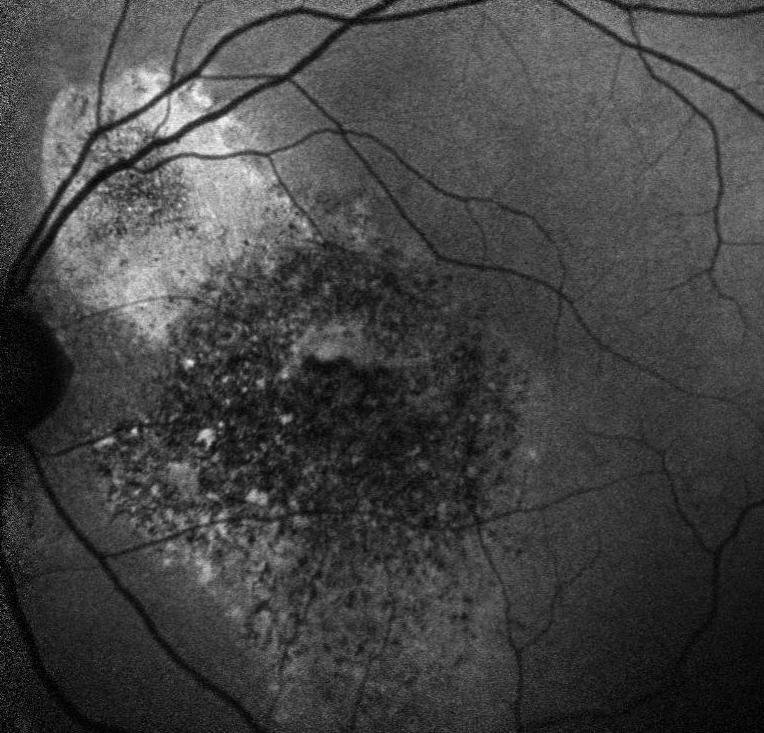
Pigmented retinal lesions:
Request an
Appointment
Opening Hours
Calls are taken 24/7 for emergencies
Available on Saturday and Sunday for Emergency only. Call for appointment
LOCATIONS AND DIRECTIONS