


2026 Eye Drop Recall:
Some over-the-counter lubricating eye drops and selected prescription steroid eye drops are among recent eye drop recalls due to manufacturing quality concerns. Most recalls are preventive and there have been no reports of widespread patient harm. Patients should check the lot number on the container, talk with their ophthalmologist before stopping their prescription steroid drops and seek immediate care if they develop increased eye pain, redness or vision loss.
We rely on eye drops to protect, heal, and soothe our eyes, so news of a recall can be unsettling. However, these recalls are proactive safety measures designed to protect patients before serious harm occurs.
Knowing which drops are affected, why they are recalled, and what steps to take can help you manage your eye care safely and confidently.
1. Prescription Recall: Prednisolone Acetate (Steroid Drops)
In June of 2026, Lupin Pharmaceuticals initiated a voluntary recall affecting more than 2.5 million bottles of a highly common prescription steroid drop.
What Is This Medication Used For?
Prednisolone Acetate Ophthalmic Suspension (1%) is a standard prescription corticosteroid. It is widely deployed by ophthalmologists to treat internal eye inflammation, swelling, redness, and itching or to treat conditions such as iritis and uveitis. Doctors may also prescribe the drops to help the eye heal safely after surgeries like cataract removal or corneal transplants.
Which Specific Bottles Are Affected?
The recall applies specifically to bottles labeled “prednisoLONE Acetate Ophthalmic Suspension, USP, 1%, Rx only” distributed by Lupin. You can identify them by checking the National Drug Code (Nd) located on the bottle or box:
- 5 mL bottle: (Nd 70748-332-02)
- 10 mL bottle: (Nd 70748-332-03)
- 15 mL bottle: (Nd 70748-332-04)
More details can be found here: Enforcement Report
Why Was It Recalled?
The FDA classified this as a Class II recall due to the potential “presence of a foreign substance” in the bottles. A Class II rating means that while the product is defective, the risk of serious adverse health consequences is considered low. Any potential side effects are typically temporary or medically reversible. To date, no adverse events or serious injuries have been reported.
What Should You Do?
CRITICAL NOTE: Do not stop using your prescription steroid drops abruptly without consulting your doctor first. Stopping a steroid drop suddenly—especially if you are recovering from recent eye surgery—can cause a rapid return of severe inflammation, increased eye pressure, pain, and potentially jeopardize your surgical outcome.
- Check your bottle: Match the Nd number and look at the lot number.
- Contact your ophthalmologist or pharmacy immediately: If your bottle matches the recall list, call your eye care team. They will swiftly arrange a replacement prescription from a different, safe manufacturer so your treatment is not interrupted.
Prescription Alternatives
Your ophthalmologist can easily substitute the recalled Lupin bottles with identical formulas or similar steroids from unaffected manufacturers, such as:
- Prednisolone Acetate 1% manufactured by alternative companies (e.g., Sandoz, Akorn, or Amneal)
- Durezol (Difluprednate)
- Lotemax (Loteprednol etabonate)
2. Over-the-Counter (OTC) Recall: Store-Brand Lubricating Drops
Separately, a large-scale voluntary recall affected more than 3 million bottles of over-the-counter (OTC) store-brand eye drops manufactured by K.C. Pharmaceuticals in April of 2026.
Which Drops Are Affected?
These are generic, store-brand drops sold nationwide at major retailers, including Walgreens, CVS, Rite Aid, Kroger, Harris Teeter, Publix, and Dollar General. They were sold under common everyday names such as:
- Dry Eye Relief
- Artificial Tears / Sterile Lubricant
- Advanced Relief
- Ultra Lubricating Eye Drops
- Redness Lubricant / Soothing Tears
More information can be found here: Enforcement Report
Why Were They Recalled?
The FDA flagged these products due to a “lack of assurance of sterility” at the manufacturing facility. Because anything applied to the eye must be completely sterile to prevent infections, the FDA stepped in out of an abundance of caution. While no illnesses or infections have been formally linked to this batch, non-sterile environments pose a remote risk of introducing bacteria or fungi to the eye.
What Should You Do?
Unlike prescription steroids, over-the-counter artificial tears can be stopped immediately without risking surgical complications.
- Stop using the drops: If you have a generic store-brand bottle from one of the listed retailers in your medicine cabinet, set it aside.
- Verify the database: Check the FDA’s official recall database to match your exact brand name and lot number. If it matches, discard the bottle.
Safe OTC Alternatives
If you need immediate relief for dry or irritated eyes, you can safely switch to major name brands that were entirely unaffected by this manufacturing issue, including:
- Systane (e.g., Systane Ultra, Systane Complete)
- Refresh (e.g., Refresh Tears, Refresh Optive)
- Blink Contacts or Blink Tears
- Retaine MGD
How to Check Your Eye Drop Lot Number
To know for certain if your specific bottle is part of a recall, you need to check its Lot Number and Expiration Date.
- Where to look: The lot number is typically printed directly onto the side of the plastic bottle’s white paper label (often near the barcode) or stamped onto the bottom flap of the cardboard box it came in.
- What it looks like: It is usually a short code of letters and numbers preceded by the word “LOT” (for example: LOT: HA00937 or LOT: LT24E01).
- Next Steps: Cross-reference this code with the official lists provided on the FDA Enforcement Report website, or simply bring the bottle to your local pharmacist, who can look it up for you in seconds.
When to Contact a Doctor
While these recalls are precautionary, you should always monitor how your eyes feel. Contact your ophthalmologist immediately if you experience any of the following warning signs:
- Eye pain or worsening discomfort
- Unusual or colorful discharge coming from the eye
- Increased redness or severe swelling
- Worsening blurry vision or sudden vision changes
Technical Overview: Manufacturing Processes, Standards, and Oversight
For a comprehensive understanding of patient safety protocols, it helps to examine how ophthalmic solutions are manufactured, the regulatory standards required to produce them, and the mechanical origins of product defects.
The Sterile Manufacturing Protocol
There are a lot more strict rules that need to be followed when making eye drops than when making oral medications like tablets. The limited natural immune defenses of the eye mean that any topical ophthalmic solution must be entirely free of viable microorganisms.
To achieve this level of purity, pharmaceutical facilities rely on two primary industrial methods:
- Aseptic Processing: The formulation of the liquid medication takes place within highly controlled cleanrooms equipped with specialized High-Efficiency Particulate Air (HEPA) filtration systems. These environments are strictly monitored to eliminate airborne particulates, bacteria, and fungi before filling takes place.
- Blow-Fill-Seal (BFS) Technology: This is the automated industry standard for sterile liquid packaging. In a continuous, computerized sequence, the plastic bottle is blow-molded from raw resin, filled with the sterile solution, and hermetically sealed within a single machine. By automating the entire sequence, the system eliminates human intervention and drastically reduces the risk of microbial introduction.
The Mechanics of Manufacturing Failures
While the FDA has not released the exact facility details outlining why these specific defects occurred, recalls are typically triggered by variance within complex engineering controls. The following examples represent general industrial mechanisms that could lead to product defects:
- Origins of “Foreign Substances”: Foreign particulate matter is usually present because of the wear and tear on automatic production equipment. Over extended operational cycles, high-precision components—such as rubber gaskets, stainless steel dosing pumps, or silicone transport tubing—can undergo microscopic wear, shedding trace particulates into the liquid line. Alternatively, variations in the heating parameters during the plastic extrusion phase of Blow-Fill-Seal packaging can create micro-fragments of plastic flash inside the vial before the liquid is introduced.
- Origins of a “Lack of Assurance of Sterility”: This designation rarely indicates an active bacterial outbreak. Instead, it occurs when a facility’s validation data fails an audit. For example, if a facility experiences a temporary pressure drop in its HEPA filtration systems, fails to properly document the sterilization cycles of its equipment, or demonstrates inadequate environmental sampling logs, the absolute sterility of the batch cannot be mathematically or historically proven. In the interest of preventive safety, the FDA mandates a recall because the proof of sterility is missing.
Contextualizing Historical Eye Drop Recalls
The frequency of eye drop recalls observed between 2024 and 2026 is the direct result of an intentional shift in federal oversight.
In 2023, an international manufacturer of over-the-counter artificial tears introduced a highly resilient, drug-resistant strain of Pseudomonas aeruginosa into the supply chain, resulting in severe clinical infections and vision loss for a small group of patients.
Consequently, the FDA fundamentally altered its enforcement strategy by implementing proactive, unannounced inspections of domestic and international ophthalmic manufacturing facilities.
The subsequent recalls initiated by K.C. Pharmaceuticals and Lupin Pharmaceuticals represent the success of this heightened surveillance model. Rather than waiting for adverse patient reports, regulatory bodies now identify manufacturing variance and documentation discrepancies at the plant level, successfully intercepting potentially compromised batches before they present a true public health risk.
Who Should Be Particularly Careful?
If you experience any of the following, call your eye doctor right away:
Had cataract surgery recently:
- Recent eye surgery
- Glaucoma
- Possess diabetic retinopathy
- Suffer from chronic dry eye condition
- Use contact lenses
- Have weakened immune systems
If you are a patient of a glaucoma specialist in North Texas, do not stop your prescription glaucoma drugs or steroid eye drops without consulting your eye doctor. If you are undergoing glaucoma treatment in Allen Texas, continue to take your prescription meds until your ophthalmologist tells you to stop.
How to Safely Use Your Eye Drops During a Recall
Even if your eye drops aren’t recalled, good hygiene can lower your risk of infection.
- Wash your hands before you put in eye drops.
- Do not allow the tip of the bottle to touch your eye or eyelids.
- Seal the bottle carefully after each use.
- Do not share your eye drops with anyone.
- Throw away expired medications.
- Store eye drops as directed on the label.
People who are taking medicine for glaucoma should also learn about the different glaucoma eye drop bottle colors. This will help them tell the difference between the different types of medicine and lower the risk of using the wrong prescription.
| Eye Drop Type | Recall Reason | Should You Stop Immediately? |
| Prescription Prednisolone Acetate | Possible foreign material | No. Contact your ophthalmologist first. |
| OTC Artificial Tears | Sterility concern | Yes, if included in the recall. |
| Other Prescription Eye Drops | Not affected | Continue as prescribed. |
Expert Advice From Our Retina & Glaucoma Specialists
Even though these recalls have gotten a lot of public attention, they are actually preventative safety measures that won’t hurt many patients. Most people can safely continue treatment following consultation with their eye doctor and receiving a replacement medicine as needed. It is important to point out that unexpected changes in vision, chronic eye pain, or worsening redness should never be ignored, as these may be indicators of an eye issue unrelated to the recall that needs rapid treatment by a retina or glaucoma specialist.
If you are seeking a glaucoma specialist near Durant Oklahoma, or complete retinal care, prompt examination will help verify that your prescriptions are still suitable and safe.
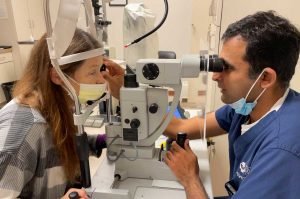
Why Select Texoma Retina Near Sherman, TX?
When your vision is on the line, the choice of an expert eye care team is important. Texoma Retina near Allen TX, offers state-of-the-art retinal and glaucoma care, utilizing the latest diagnostic technologies and evidence-based treatments. Our fellowship-trained specialists care for patients with retinal illness, diabetic eye disease, macular degeneration, and glaucoma throughout North Texas. Whether you are searching for a glaucoma specialist in North Texas, skilled glaucoma treatment in Allen Texas, or a glaucoma specialist near Durant, Oklahoma, we are committed to providing compassionate, tailored care. Conveniently located near Sherman, TX, Texoma Retina is delighted to serve patients from Allen, McKinney, Gainesville, Denison, Sherman, and Southern Oklahoma with prompt appointments, advanced treatment choices, and a strong focus on preserving lifelong vision.