



The Future of Sight: Breakthroughs and New Treatments for Macular Degeneration
For years, a diagnosis of age-related macular degeneration (AMD) felt like an uphill battle against time. As the leading cause of central vision loss in older adults, managing the condition has traditionally meant balancing regular, sometimes stressful visits to the clinic.
However, the landscape of AMD treatment has shifted dramatically. With long-acting medications, the first-ever therapies for advanced dry AMD, and pioneering research into needle-free treatments, there is more reason for optimism than ever.
Patients have more reasons for hope than ever before, thanks to longer-acting drugs, novel therapies for severe dry AMD, new drug-delivery devices, studies of gene therapy, and promising needle-free options. These changes are encouraging news for people looking for age-related macular degeneration treatment in Texas because they show how treatment may become more specific and simpler to use in the future.
Understanding the Two Faces of AMD-
To understand how these breakthroughs work, it helps to look at the two forms the disease can take:
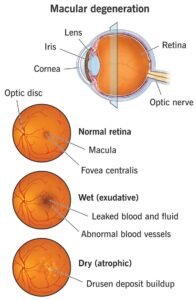
- Dry AMD: The most common form, characterized by the gradual thinning of the macula (the center of the retina) and the accumulation of tiny protein deposits called drusen. Advanced dry AMD can lead to Geographic Atrophy (GA), where patches of retinal cells permanently die off.
- Wet AMD: A more aggressive form where abnormal, fragile blood vessels grow underneath the retina. These vessels can leak fluid and blood, causing rapid changes to central vision.
Both kinds involve the macula but have different monitoring and treatment procedures. A macular degeneration specialist in Sherman TX can assess the type and stage of AMD and propose a specific treatment and monitoring strategy.
Wet AMD: Moving Beyond Monthly Injections
The current standard of care for wet AMD is mainly dependent on anti-VEGF drugs, which block vascular endothelial growth factor, a protein implicated in the formation and leakage of aberrant blood vessels. Wet macular degeneration treatment has changed because of these treatments, which have helped many people keep their useful vision.
Injections of traditional anti-VEGF therapy may need to be given every few weeks to months depending on the medicine, disease activity, and individual response. Researchers are looking at longer-lasting remedies that could minimize the frequency of visits and injections.
Next-Generation Biologics:
Newer medications like Faricimab (Vabysmo) target two different disease pathways at once, while Aflibercept High-Dose (Eylea HD) delivers a stronger concentration of active medicine. For many patients, these advancements extend the time between clinic visits to 3 or 4 months.
If you’re a patient considering AMD treatment in Texas, you might want to speak with a retina specialist about the anti-VEGF treatments to discover which strategy may be appropriate.
The Refillable Port System:
Devices like Susvimo act like a tiny reservoir. Roughly the size of a grain of rice, it is surgically implanted into the eye and slowly releases medicine over time, requiring a refill only about once every six months.
This type of technology represents a significant advance in reducing treatment frequency while delivering medicine directly to the eye.
Gene Therapy (“One-and-Done”) ):
Currently in advanced clinical trials (such as ABBV-RGX-314), this approach uses a single treatment to “program” the eye’s own cells to continuously produce anti-VEGF medicine, potentially eliminating the need for regular injections.
These medicines are still being studied in clinical trials, and their long-term safety, effectiveness, and appropriate use are still being studied. Gene therapy, however, may someday revolutionize the management of persistent retinal illnesses.
Dry AMD: Hope for Advanced Stages
For decades, there were no medical treatments to stop the progression of dry AMD. While the AREDS2 vitamin formula remains a foundational tool to slow down early-to-intermediate stages, late-stage Geographic Atrophy (GA) left patients with few options.
One of the biggest developments has been the identification of the complement system, a part of the body’s immune response that might contribute to Geographic Atrophy.
That changed with the discovery of the complement cascade—a part of the immune system that accidentally attacks healthy retinal cells in dry AMD.
Complement Inhibitors:
Newer FDA-approved medications like Pegcetacoplan (Syfovre) and Avacincaptad pegol (Izervay) are injected into the eye to block this immune response. While they cannot restore lost vision, clinical data shows they slow down the expansion of blind spots, buying patients valuable time to preserve their remaining sight.
These treatments do not replace the retinal cells that have already been lost, nor do they restore the lost vision. They are not meant to cure geographic atrophy but to slow down progression in the right patients. A retina specialist should examine the possible benefits and hazards in detail.
This breakthrough is particularly relevant for those looking for dry macular degeneration treatment, since it signifies a shift from primarily monitoring advanced disease to actually reducing the progression of illness in chosen patients.
Photobiomodulation (Light Therapy):
Non-invasive, needle-free light delivery systems (like Valeda) use specific wavelengths of red and near-infrared light to stimulate cell metabolism, keeping the retina healthier and longer.
The goal is to provide a non-invasive, light-based treatment to support the function of retinal cells. Since this field is still growing, people should consult their eye specialist if a certain technique is FDA-approved, clinically suitable, and available for their specific stage of AMD.
Stem Cell Therapy:
Researchers are testing ways to transplant healthy, lab-grown retinal cells back into the eye to replace those that have already died.
While promising, stem cell therapy for AMD is still an area of active study. Patients should be cautious of clinics that provide unapproved stem cell operations and should seek the advice of a certified retinal specialist about legitimate opportunities to participate in clinical trials.
The Ultimate Goal
Swapping Needles for Drops and Pills
The most frequent request from patients undergoing AMD therapy is a simple one: “Can we get rid of the injections?” Good thing this is one of the most active areas of eye research right now. Scientists are aggressively working to pivot away from the eye wall entirely by developing oral medications and topical eye drops that can penetrate deep into the back of the eye.
1. Investigative Eye Drops
Rather than injecting anti-VEGF or anti-inflammatory agents into the vitreous gel of the eye, novel formulations (such as topical solutions like NT-101) are being designed to pass seamlessly through the cornea and reach the retina via simple daily eye drops. If successful, such an approach would allow wet AMD patients to manage their condition safely at home.
If eye-drop treatments in the future can transport sufficient medication to the retina in a reliable manner, the experience for patients who today rely on recurrent injections could be radically changed.
2. Emerging Oral Medications
For dry AMD and geographic atrophy, the focus has shifted heavily toward oral pills. Medications like Iptacopan and STL303—which act as oral complement inhibitors—are currently moving through Phase 2 clinical trials. By taking a daily pill, the goal is to systematically calm the immune pathways damaging the retina without ever needing a needle.
While these drops and pills are still undergoing rigorous clinical safety trials to ensure they can deliver enough active medicine to the retina, they represent the ultimate horizon for stress-free, patient-friendly eye care.
AMD Care Is Becoming More Personalized
The future of AMD treatment is not about finding one replacement for injections. Instead, researchers are pursuing several approaches that might potentially be integrated depending on the type of disease the patient has, their genetic profile, the state of their retina, their reaction to therapy, and their lifestyle.
Longer-acting anti-VEGF drugs and sustained drug delivery networks may minimize the frequency of treatment for wet AMD. Complement inhibitors offer possibilities to decrease disease progression in eligible patients for geographic atrophy. Gene therapy, stem cell research, photobiomodulation, oral drugs, and topical treatments may provide more avenues in the years to come.
AMD may vary over time, and it is particularly crucial for people seeking a retina specialist near Durant, Oklahoma, to have access to professional retinal assessment. Depending on patient needs, patients from Durant and adjacent regions in Southern Oklahoma may come to North Texas for specialized retinal care.
How Can Texoma Retina Near Allen TX Help?
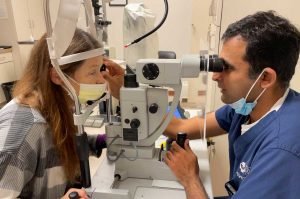
Dr. Vijay Khetpal from Texoma Retina offers specialized evaluation and treatment of the retina for patients, including macular degeneration. If you are looking for a macular degeneration specialist in Sherman TX, a full eye exam of the retina can detect AMD, evaluate the kind and how severe it is, and provide a monitoring or treatment plan that is appropriate.
Allen, McKinney, Sherman, and Denison patients and those from other North Texas towns and nearby Southern Oklahoma locations such as Durant, Hugo, and surrounding areas may choose to come in for specialized retinal care, depending on their unique situation.
If you are looking for age-related macular degeneration treatment in Texas, keep in mind that the treatment should be based on what your retinal findings show. Also, people looking for AMD treatment in Texas should know that improved treatments may work only for some types or stages of AMD.
People who have wet disease need to be diagnosed quickly and be closely watched over time because abnormal blood vessel growth can rapidly affect their eyes. People who want to get wet macular degeneration treatment can talk to a retina expert about anti-VEGF injections, longer-acting medications, and other effective treatment options.
Individuals who have dry AMD or geographic atrophy can talk to an expert about available dry macular degeneration treatment, such as whether nutritional supplements, monitoring, complement-inhibiting therapy, or other methods may be suitable.
A Note for Patients
Managing macular degeneration is a marathon, not a sprint. While we await the commercial rollout of drops and gene therapies, staying consistent with your current treatment plan is the most effective way to protect your sight. If you want to understand better what to expect during your current routine, you can read our comprehensive guide explaining injections for macular degeneration.
Always speak closely with your retina specialist about the latest clinical trials and whether these emerging, long-acting therapies might be a good fit for your vision journey.