



Navigating Your Glaucoma Treatment Options: A Patient Guide
If you or a loved one has recently been diagnosed with glaucoma, or if your current treatment is no longer keeping your eye pressure where it should be, you may feel overwhelmed by the options. The good news is that glaucoma care has advanced dramatically over the past decade. Treatment is no longer a one-size-fits-all prescription.
Today, patients have real choices. Understanding how your disease stage, personal risk tolerance, and lifestyle preferences shape those choices empowers you to work alongside your ophthalmologist to pick the right path for your vision.
1. How Your Doctor Evaluates Your Eye
Before choosing a treatment, your eye care team considers several important factors:
- Stage of Glaucoma: Early or mild glaucoma (where there is no noticeable visual field loss) is treated differently than advanced glaucoma (where peripheral vision is degraded or central vision is threatened).
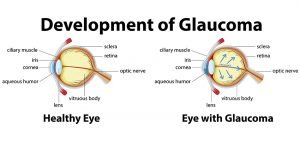
- Target Intraocular Pressure (IOP): Glaucoma damages the optic nerve, usually due to elevated pressure inside the eye. Your “target pressure” is the safe pressure level your doctor aims to achieve to stop further nerve damage.
- Cataract Status: If you also have a cataract (clouding of the eye’s natural lens), this condition presents a unique opportunity. Many modern glaucoma procedures can be performed through the exact same microscopic incision during cataract surgery.
2. The Glaucoma Treatment Options Spectrum: Options, Benefits, and Risks
Glaucoma treatment options fall along a spectrum, ranging from daily non-invasive therapies to major structural surgeries.
Path A: First-Line Non-Surgical Options
Ideal for early-to-moderate glaucoma or newly diagnosed patients.
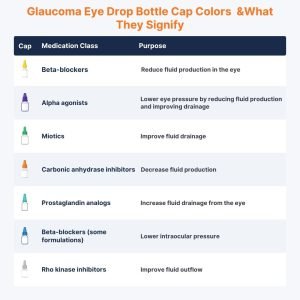
- Prescription Eye Drops: Drops work by reducing the amount of fluid your eye creates or helping fluid drain out more easily.
- Pros: Non-surgical and highly effective when used correctly.
- Risks & Trade-offs: Requires strict daily compliance. Drops can cause local side effects like eye redness, stinging, dry eye, or changes in eyelash growth, as well as recurring prescription costs.
- In-Office Laser (Selective Laser Trabeculotomy – SLT): SLT uses gentle light energy to stimulate the eye’s natural drainage meshwork, making it more fluid-permeable.
- Pros: Quick, painless, performed in a standard exam room. Can reduce or eliminate the need for daily drops for several years.
- Risks & Trade-offs: Extremely low risk of temporary pressure spikes or mild inflammation. The pressure-lowering effect may gradually wear off over 3 to 5 years (though it can often be repeated).
Path B: Minimally Invasive Glaucoma Surgery (MIGS)
Ideal for mild-to-moderate glaucoma, especially when paired with cataract surgery.
MIGS procedures use microscopic equipment and micro-stents (such as the iStent® or Hydrus® Microstent) or gentle tissue modifications (such as GATT or Goniotomy) to unblock or bypass resistance in the eye’s natural drainage pathways.
- Pros: Outstanding safety profile compared to traditional surgery, quick recovery (often days to a couple of weeks), and minimal disruption to eye tissues.
- Risks & Trade-offs: Provides a moderate drop in eye pressure—which is often perfect for mild-to-moderate cases, but may not be enough for advanced disease needing extremely low target pressures.
- Recovery: Mild discomfort or temporary blurry vision for a few days; minimal lifetime restrictions.

Path C: Major Filtering & Drainage Surgeries
Ideal for severe, advanced, or rapidly progressing glaucoma when lower-risk options haven’t lowered pressure enough.
When the eye’s natural drainage system is too damaged to function, traditional surgeries create an entirely new bypass route outside the natural system to drain fluid under the outer membrane of the eye (the conjunctiva).
- Trabeculectomy: The surgeon creates a tiny flap valve in the white wall of the eye (sclera) to allow fluid to escape into a tiny reservoir hidden under the eyelid (a bleb).
- Glaucoma Tube Shunts: A microscopic flexible tube is inserted into the front of the eye and connected to a tiny reservoir plate implanted under the eye tissue.
- Subconjunctival Micro-Stents (e.g., XEN® Gel Stent): A hybrid option that uses a soft tube to route fluid into the subconjunctival space with a slightly smaller incision than traditional surgery.
- Pros: Capable of achieving the lowest possible intraocular pressure when vision preservation depends on aggressive pressure reduction.
- Risks & Trade-offs: Higher risk of complications, including infection, pressure dropping too low (hypotony), bleeding, or tissue scarring.
- Recovery: Requires several weeks to months of healing, frequent post-operative clinic visits, and temporary restrictions on heavy lifting or bending over.
3. How Personal Factors Influence the Final Decision
Choosing a treatment is a balance between clinical necessity and personal life circumstances:
| Your Personal Scenario | What Options Might Fit Best |
| “I struggle to remember daily drops or suffer severe dry eye from them.” | Consider SLT laser or a MIGS procedure to reduce or eliminate reliance on daily medications. |
| “I’m already scheduled for cataract surgery.” | Ask about adding a MIGS device or procedure during the same surgery to treat two conditions at once. |
| “I have advanced vision loss and need my pressure as low as possible.” | Traditional filtering surgery (Trabeculectomy or Tube Shunt) offers the strongest pressure reduction. |
| “I cannot afford a long time off work or strenuous activity.” | SLT laser or MIGS offer fast recovery timelines with minimal activity restriction. |
4. Questions to Bring to Your Next Appointment
When sitting down with your ophthalmologist, use these open questions to help guide your decision:
- “What is my current stage of glaucoma, and what is my specific target eye pressure?”
- “Am I a candidate for in-office laser (SLT) or a minimally invasive procedure (MIGS)?”
- “If we choose a surgical option, what does the recovery process look like for my daily routine and work?”
- “What are the risks if we stay on my current treatment plan versus stepping up to a procedure?”
What can Texoma Retina Center do for you?
If you are seeking a glaucoma specialist near Durant Oklahoma, Texoma Retina Center in Sherman TX, offers complete evaluation and personalized glaucoma therapy for patients throughout North Texas and southern Oklahoma. We take the time to understand your eye health, lifestyle, and treatment goals before prescribing the next step.
For people looking for an eye doctor near Durant, Oklahoma, or an eye specialist near Sherman, Texas, our specialists offer advanced diagnostic exams and talk about both non-surgical and medical ways to treat glaucoma when it needs more care.
If medication and laser treatment are no longer enough, our staff can determine whether Minimally Invasive Glaucoma Surgery (MIGS) or other techniques could be suitable. In North Texas, glaucoma treatment surgery may use these more advanced treatments to drop the eye pressure to a much lower level and preserve the residual eyesight.
If a drainage implant is advised, you may be a candidate for glaucoma tube shunt surgery in Texas to help manage the pressure in your eyes. A glaucoma tube shunt provides an alternative route for fluid to exit the eye and may be considered if conventional therapies have not achieved the required pressure management.
If you have concerns that your glaucoma is progressing or want a second opinion on your current treatment, Texoma Retina Center in Sherman, TX will help you understand your options and make an informed decision with your ophthalmologist.