



VITRECTOMY
Vitrectomy Eye Surgery in Texas
Advanced Surgical Care for Complex Retinal Conditions
If you have a retinal problem, timely treatment can save your vision. At Texoma Retina, we offer advanced vitrectomy eye surgery in Texas to detect and treat significant retinal problems with the newest minimally invasive surgical procedures. Our fellowship-trained retina surgeons are specialists in saving vision and restoring retinal health for patients in North Texas and Southern Oklahoma.
Whether you require treatment for retinal detachment, vitreous hemorrhage, macular hole, or diabetic eye disease, our staff is dedicated to providing customized care with outstanding surgical skill.
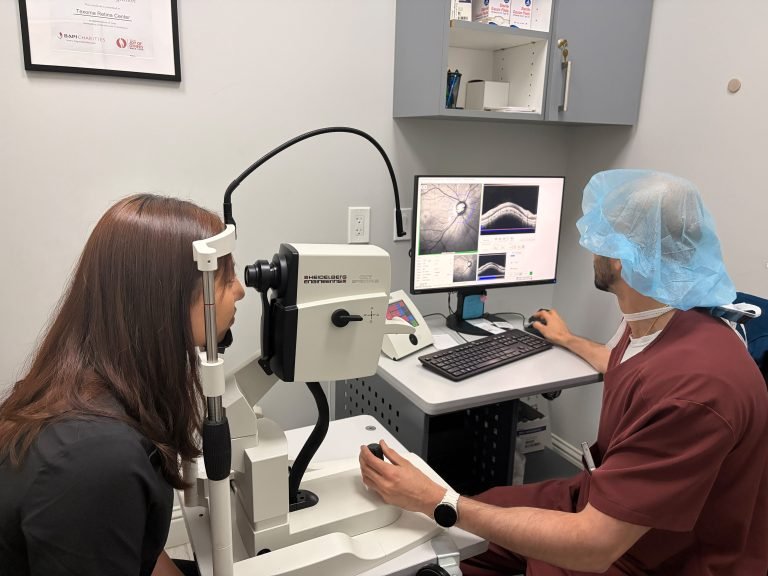
What is vitrectomy?
A vitrectomy is a microsurgical procedure that removes the vitreous humor, the transparent, gel-like material filling the center of the eye. The surgeon removes the vitreous so they can reach the retina, the light-sensitive tissue at the back of the eye that catches light and turns it into vision.
Vitrectomy is often indicated when medications, laser treatment, or injections alone cannot adequately cure retinal problems.
- A vitrectomy is a microsurgical technique that removes the vitreous gel from the eye to access and treat retinal diseases.
- It is typically performed for treatment of retinal detachment, macular holes, vitreous hemorrhage, and severe diabetic eye disease.
- This approach offers the advantage of treating the retinal pathology directly, which cannot be done with injections or laser alone.
Our experienced retina vitrectomy specialist in Texas, Dr. Vijay Khetpal, carefully looks at each patient to figure out the best way to treat their retinal problem.
Conditions Treated with Vitrectomy
The vitrectomy procedure is used to treat many complicated eye problems, such as
- Retinal detachment (rhegmatogenous and tractional)
- Macular hole
- Epiretinal membrane (macular pucker)
- Vitreous hemorrhage
- Complications of diabetic retinopathy
- Retinal tears
- Retinal scar tissue
- Severe retinal infections
- Eye injuries involving the retina
A lot of these conditions are called emergencies that could damage your eyesight. Getting an evaluation and surgery as soon as possible greatly increases the chance of keeping your sight.
How Is Vitrectomy Surgery Performed?
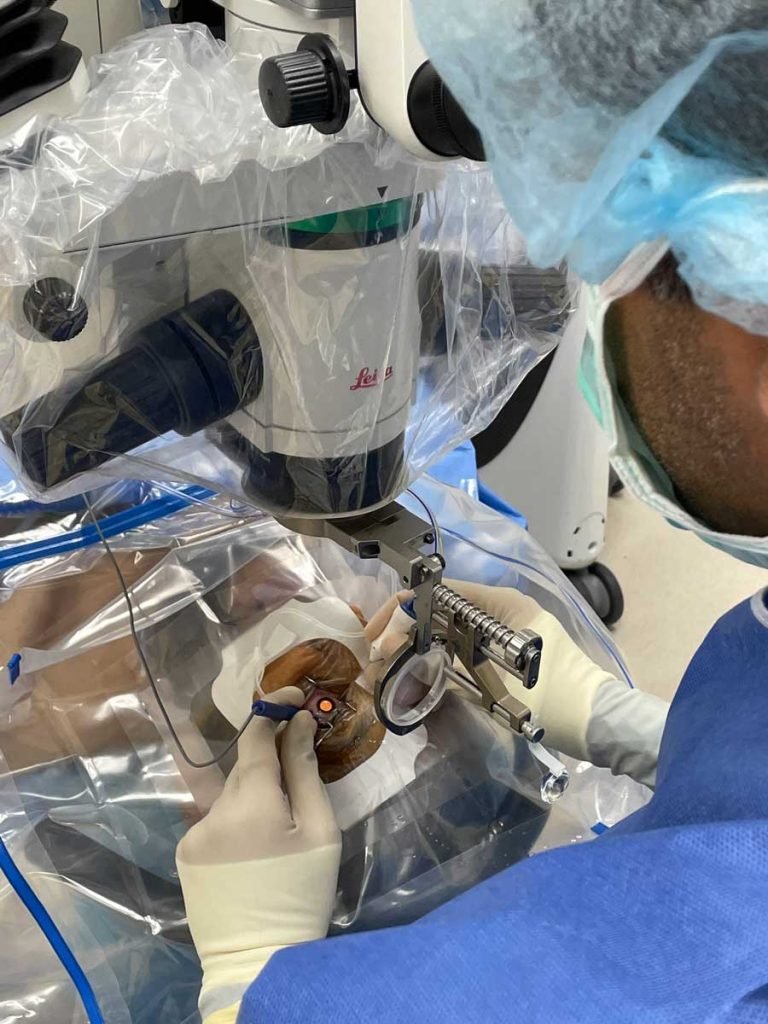
During vitrectomy eye surgery in Texas, the surgeon makes three tiny cuts in the pars plana, the white part of the eye beneath the iris. Specialised microsurgical devices are used to securely remove the vitreous gel to get access to the retina.
Procedure Explanation
During surgery, the surgeon will:
- Create tiny incisions in the pars plana
- Insert a fiber-optic light to illuminate the inside of the eye
- Remove the vitreous gel with a specific vitrector
- Repair retinal detachment or retinal tears
- Remove scar tissue or aberrant membrane
- Laser therapy to treat abnormal blood vessels (if necessary)
- Insert a gas bubble or silicone oil to help the retina recover
Texoma Retina performs vitrectomy surgery in Sherman TX, with state-of-the-art 25-gauge or smaller equipment. These less intrusive treatments minimise the trauma of surgery, involve smaller incisions, and typically lead to a quicker and more comfortable recovery.
Postoperative Expectations
Vitrectomy is usually done as an outpatient treatment, and most patients go home the same day.
Recovery time will depend on the problem being treated and if a gas bubble or silicone oil has been inserted in the eye.
After surgery, you may be advised to:
- Keep your head in a certain position for a certain number of days
- Use eye drops as directed.
- Do not do heavy lifting or strenuous activity.
- Keep follow-up appointments as scheduled.
Treatment for a disease and the use of a gas bubble can affect recovery. Your vision may improve in several weeks or months because the eye is still healing. For patients coming to Texoma Retina from neighboring towns, including those looking for an eye doctor near Durant Oklahoma, or an eye specialist near Hugo, Oklahoma, it may be convenient to stay overnight for their next-day postoperative visit.
Is Vitrectomy Effective?
Vitrectomy has saved and improved the eyes of thousands of people.
The procedure was done by a doctor to treat vitreous hemorrhage, retinal detachment, complications from diabetes, and macular holes. Treatment that starts before lasting damage to the retina usually has the best results.
If you see sudden flashes of light, a lot more floaters, blurred vision, or a shadow that looks like a curtain over your vision, you need to see a doctor right away. A vitrectomy is often needed for urgent or life-threatening retinal conditions that can’t wait to be treated because waiting too long can cause lasting vision loss.
Risks and Safety
Any surgery has some risks, and vitrectomy is no different. However, major problems rarely happen.
Some possible risks are:
- Cataract formation
- Increased eye pressure
- Retinal detachment
- Bleeding inside the eye
- Corneal swelling
- Infection (endophthalmitis)
When experienced retina specialists do surgery, these problems don’t happen very often. Before the procedure, your surgeon will discuss the pros and cons to ensure you are fully informed.
Why Choose Texoma Retina?
Texoma Retina is a specialized medical practice focused on illnesses of the retina and vitreous. Our fellowship-trained surgeons combine years of specialized knowledge with state-of-the-art technologies to provide excellent patient care.
We are delighted to deliver vitreoretinal surgery in Texas to patients in Sherman, Allen, McKinney, Denison, Gainesville, and throughout North Texas. We also welcome individuals from Southern Oklahoma who are looking for an eye surgery retina specialist in Allen TX, expert retinal care in Sherman, or advanced vitreoretinal surgery near home.
Our promise is to deliver precise diagnoses, tailored treatment plans, and caring support at every step of your vision journey.

Schedule Your Vitrectomy Consultation
If you have been diagnosed with retinal detachment, diabetic retinopathy, vitreous hemorrhage, macular hole, or another retinal illness that requires surgery, prompt treatment offers the best chance to save your vision.
Contact Texoma Retina today to schedule a consultation with a retina vitrectomy specialist in Texas and learn if vitrectomy eye surgery is the appropriate treatment for your situation.
For more info, please click on the link that applies to you:
Vitreous Hemorrhage Vitrectomy
Epiretinal Membrane Vitrectomy
Diabetic Retinopathy Vitrectomy
Frequently Asked Questions
Vitrectomy is used to treat retinal detachment, vitreous hemorrhage, macular holes, complications of diabetic retinopathy, retinal tears, and other complicated retinal conditions that can damage or even destroy eyesight.
A vitrectomy can treat retinal detachment, epiretinal membranes, vitreous bleeding, macular holes, diabetic retinal disease, retinal trauma, and severe retinal infections.
Through tiny cuts, the surgeon takes out the vitreous gel, fixes any damage to the retina, gets rid of any scar tissue, and may add a gas bubble or silicone oil to help the eye heal.
Patients shouldn't feel any pain during surgery because the procedure is done under anesthesia. Mild pain is normal afterward, and it usually goes away in a few days.
Recovery is different for each disease that is treated. If a gas bubble is used, patients may need to keep their heads in a certain position. As the eye heals, vision typically improves gradually over the course of several weeks to months.
Request an
Appointment
Opening Hours
Calls are taken 24/7 for emergencies
Available on Saturday and Sunday for Emergency only. Call for appointment
LOCATIONS AND DIRECTIONS