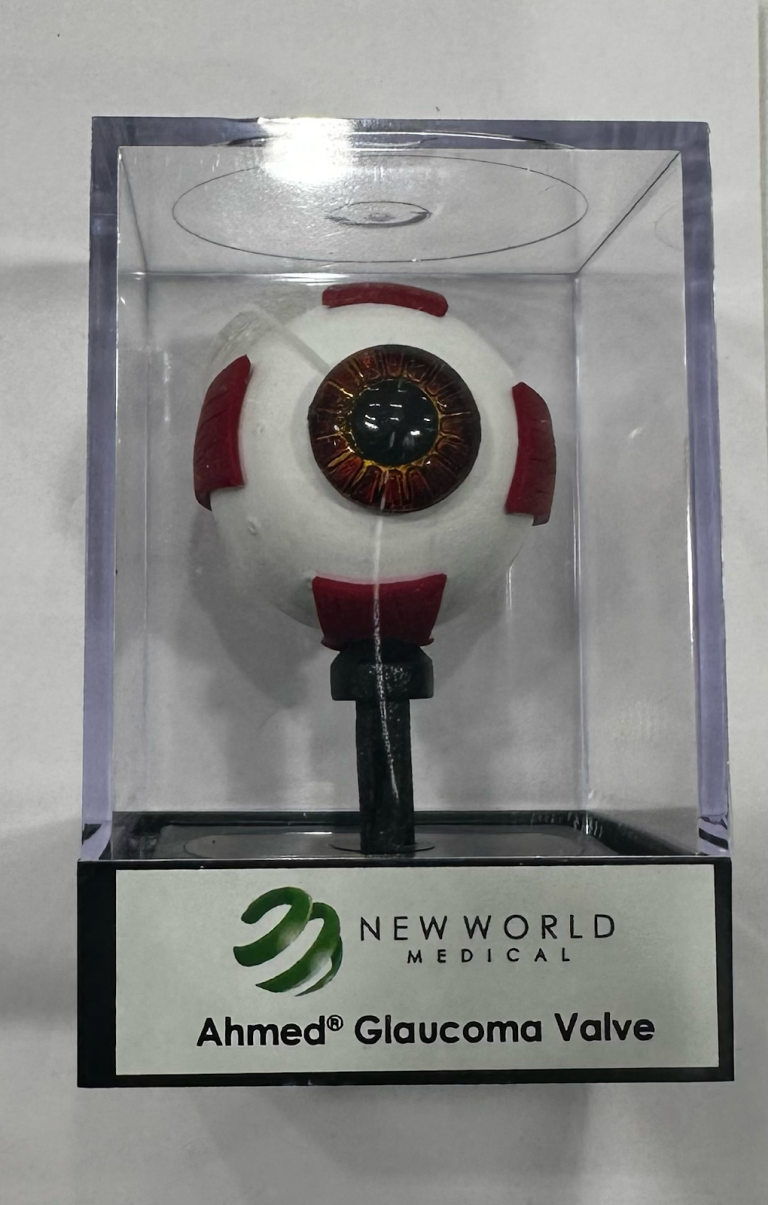
Purpose: The Ahmed FP7 is a glaucoma drainage device used to lower intraocular pressure (IOP) in patients whose glaucoma has not responded to medication, laser treatments, or prior surgeries. It helps regulate eye pressure by diverting excess fluid from the front of the eye to a reservoir under the conjunctiva.
When the implant is needed:
Neovascular glaucoma
Refractory glaucoma (e.g., due to uveitis, aphakia, trauma)
Congenital or infantile glaucoma
Failed trabeculectomy or other prior glaucoma surgeries
Severe open-angle glaucoma unresponsive to medication
Procedure:
Setting: Outpatient surgical center Time: Approximately 45 to 60 minutes Anesthesia: Local or general anesthesia, depending on the patient Goal: Implant a valve to help regulate fluid flow and lower IOP
Steps
The patient is given anesthesia and the eye is sterilized
The surgeon makes a small incision in the conjunctiva
The plate of the Ahmed valve is sutured onto the sclera (white part of the eye), typically behind the eye muscles
A small flexible tube is inserted into the anterior chamber of the eye
The other end of the tube is attached to the plate reservoir
The device begins to regulate drainage of aqueous humor from the eye to the plate
A patch graft (often donor sclera or pericardium) is placed over the tube to prevent erosion
The conjunctiva is closed, and post-op medications are administered
What to Expect After Surgery
Outpatient procedure (no hospital stay)
Frequent follow-ups to monitor IOP, healing, and tube position
Prescribed antibiotic and anti-inflammatory eye drops
Temporary blurry vision and activity restrictions
Most patients resume normal routines in 2–4 weeks
Benefits
Effective IOP control when other treatments fail
Valved design reduces risk of early hypotony
Suitable for complex or high-risk glaucoma
May reduce or eliminate need for glaucoma medications
Provides long-term pressure management
Risks & Complications
Corneal edema
Choroidal detachment
Tube contact with cornea or iris
Hyphema (eye bleeding), iritis
Synechiae (internal adhesions)
Tube obstruction, retraction, or exposure
Patch graft erosion
Rare: double vision (diplopia)
Request an
Appointment
At Texoma Retina Center, our focus is on providing the most progressive cutting-edge vitreo-retinal services in a caring and compassionate atmosphere.
LET’S GET STARTED
Stay up to date on
solutions and news
[mailpoet_form id="1"]
Opening Hours
Calls are taken 24/7 for emergencies
MONDAY
08.00 AM – 05.00 PM
TUESDAY
08.00 AM – 05.00 PM
WEDNESDAY
08.00 AM – 05.00 PM
THURSDAY
08.00 AM – 05.00 PM
FRIDAY
08.00 AM – 05.00 PM
Available on Saturday and Sunday for Emergency only. Call for appointment
LOCATIONS AND DIRECTIONS
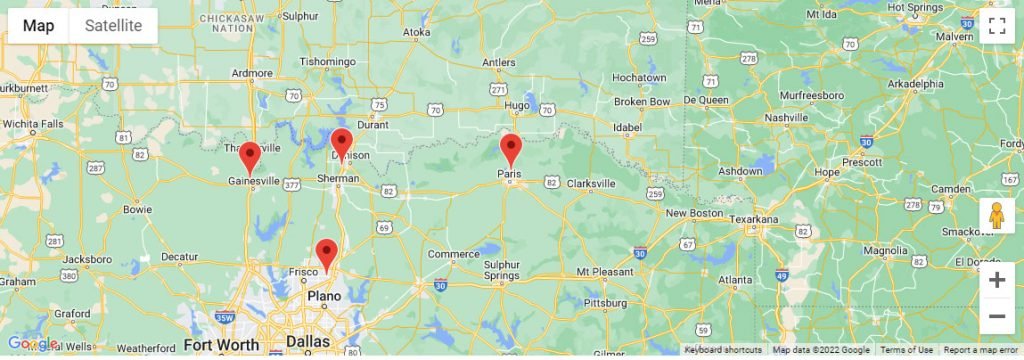
Denison/Sherman | Gainesville | McKinney/Allen | Paris