



Trabeculectomy
Trabeculectomy Surgery in Sherman TX
Author: Aashna Bhakkad
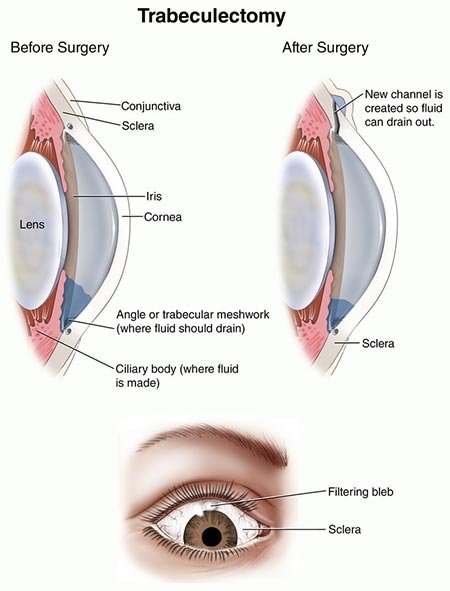
Trabeculectomy is a form of glaucoma filtering surgery performed to reduce intraocular pressure (IOP) when medications, laser treatment, or less-invasive techniques do not give appropriate control. The procedure establishes a new conduit for the aqueous humor to drain from the eye , thus lowering the pressure and preventing additional injury to the optic nerve.
Texoma Retina & Glaucoma provides patients in Sherman TX, with personalized evaluation and surgical planning for glaucoma trabeculectomy surgery. Our physicians also perform trabeculectomy surgery in Sherman TX and decide on treatment based on the type of glaucoma, severity of the disease, past surgeries, and target eye pressure.
What Is Trabeculectomy?
Trabeculectomy is a filtering surgery where the surgeon constructs a tiny aperture under a scleral flap. This hole allows aqueous humor to flow into a conjunctival filtering bleb decreasing IOP. This procedure is usually recommended when glaucoma is not controlled with medication or laser treatment.
Glaucoma trabeculectomy treatment can produce significant pressure decrease without the use of a traditional drainage implant in the eye. If you are a patient considering glaucoma surgery in Sherman TX, you may be evaluated to see if trabeculectomy or another technique is right for you.
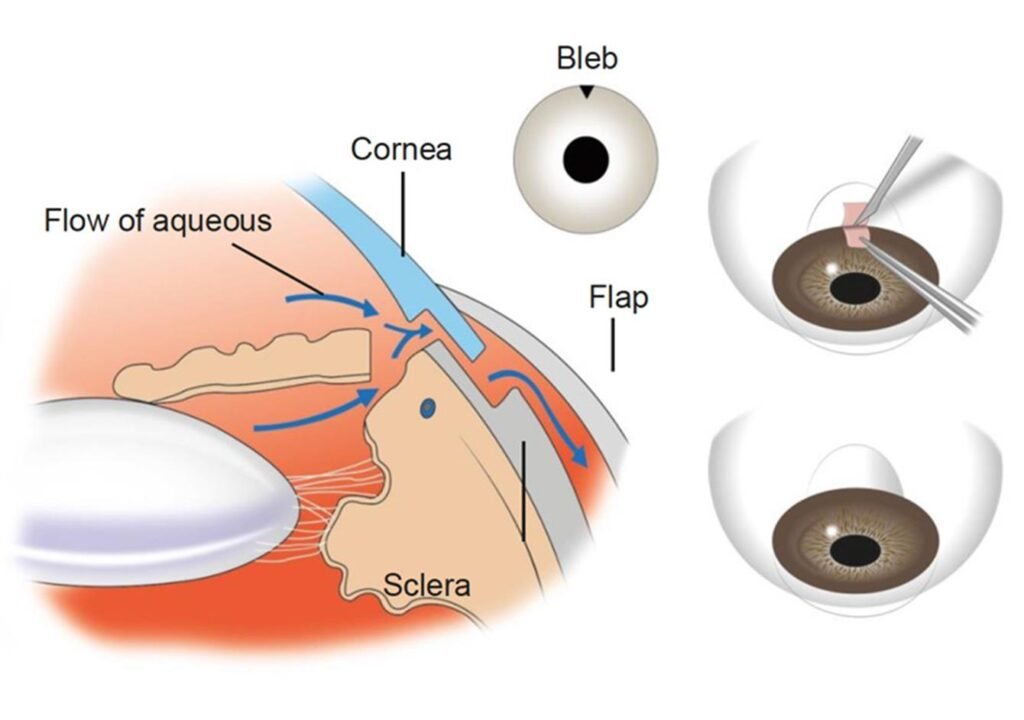
Purpose: Trabeculectomy is an outpatient eye surgery performed to lower intraocular pressure (IOP) in patients with glaucoma. It is typically recommended when medications, laser procedures like SLT, or other less invasive treatments fail to control eye pressure effectively. Trabeculectomy helps prevent further vision loss by improving fluid drainage from the eye.
When trabeculectomy is needed?
- You have open-angle glaucoma or angle-closure glaucoma
- Eye drops or laser surgery have not adequately controlled IOP
- You require a significant drop in eye pressure
- You prefer a non-implant-based surgical option
- You have no prior scarring of the conjunctiva from earlier surgeries
- Your doctor believes this is the best surgical option based on eye structure
Procedure
Setting: Outpatient surgical center or hospital
Time: Around 45 to 60 minutes
Anesthesia: Local anesthesia with sedation
Goal: To create a new drainage route for aqueous humor, the fluid inside the eye
Steps :
- The patient receives local anesthesia and a sterile drape is placed
- The surgeon creates a small flap in the white part of the eye (sclera)
- A tiny opening is made under this flap to allow fluid to drain
- The flap is sewn loosely to regulate the flow of fluid
- A small bubble (bleb) forms under the conjunctiva to collect the draining fluid
- Mitomycin C or 5-FU (anti-scarring agents) may be applied to reduce healing that could block the drainage
- The conjunctiva is closed over the bleb to complete the procedure
- The eye is covered and monitored post-operatively
What to Expect After Surgery?
- Vision may be blurry for several days or weeks
- Regular follow-up appointments are critical to monitor healing and IOP
- Eye drops (antibiotic and steroid) are usually prescribed to prevent infection and reduce inflammation
- You may need sutures removed or adjustments made in the clinic afterward
- Avoid rubbing the eye, bending over, or lifting heavy objects during recovery
- Most patients resume normal activities within 2–6 weeks, depending on healing
Risks of the Procedure
Trabeculectomy is generally safe, but possible complications include:
- Hypotony (eye pressure too low)
- Infection (blebitis or endophthalmitis)
- Scarring of the bleb, which can reduce surgical success
- Acceleration of cataract formation
- Bleeding inside the eye (choroidal hemorrhage)
- Vision loss in rare or severe cases
Benefits of the Procedure
- Long-lasting pressure control, especially when medications fail
- Reduces dependence on eye drops
- Can significantly slow or stop vision loss from glaucoma
- No need for foreign implants
Trabeculectomy vs. Tube Shunt Surgery
Both methods lower the IOP by providing another avenue for drainage. Trabeculectomy makes a filtering bleb without using a standard tube implant. Tube-shunt surgery utilizes a drainage device. Your option will depend on the severity of your glaucoma, previous eye surgery, scarring, anatomy, and the surgeon’s judgment.
A customized assessment establishes whether trabeculectomy surgery for glaucoma in Sherman TX is suitable for patients considering this procedure. Trabeculectomy Surgery in Sherman TX may also be an option if the previous therapies have not attained the required pressure target.
Citations
American Academy of Ophthalmology. Trabeculectomy: What to Expect. 15 Jan. 2021.
https://www.aao.org/eye-health/treatments/trabeculectomy.
Glaucoma Research Foundation. Trabeculectomy Surgery for Glaucoma.
https://glaucoma.org/trabeculectomy-surgery-for-glaucoma/.
National Eye Institute. Glaucoma Treatment. U.S. Department of Health and Human Services,
https://www.nei.nih.gov/learn-about-eye-health/eye-conditions-and-diseases/glaucoma/glaucoma-treatment.
Kirwan, James F., et al. “Trabeculectomy in the 21st Century: A Multicenter Analysis.” Ophthalmology, vol. 120, no. 12, 2013, pp. 2532–2539.
https://doi.org/10.1016/j.ophtha.2013.05.024.
Frequently Asked Questions
A controlled drainage pathway is made so that aqueous humor can leave the eye. This lowers IOP and eases pressure on the optic nerve.
In cases where drugs or laser treatment aren't enough to control glaucoma, especially when a big drop in pressure is needed, this option may be considered.
Yes. Normal glaucoma filtering surgery needs close tracking afterward.
The process usually takes less than an hour, but the exact length of time depends on the subject and the circumstances of the surgery.
Recovery takes a few weeks and needs many follow-up visits. During the healing process, patients may have blurred vision, redness, or pain in the eye.
Request an
Appointment
LET’S GET STARTED
Stay up to date on solutions and news
Opening Hours
Calls are taken 24/7 for emergencies
Available on Saturday and Sunday for Emergency only. Call for appointment
LOCATIONS AND DIRECTIONS