



Types of lenses (intraocular lenses/IOLs) available after Cataract Surgery
A cataract is an eye condition in which proteins in the lens crystallize, causing it to become cloudy. This leads to the inability of the eye to see efficiently, causing blurry, hazy, and less colorful vision. One way to treat this condition is through cataract surgery. It’s where a surgeon goes in and removes the natural, cloudy lens in the eye and replaces it with a new, transparent lens (known as an intraocular lens, or IOL). It enables the individual to see more clearly. There is a wide variety of lenses to choose from, each of which offers the patient different types of benefits based on the patient’s lifestyle, needs, medical history, and budget.
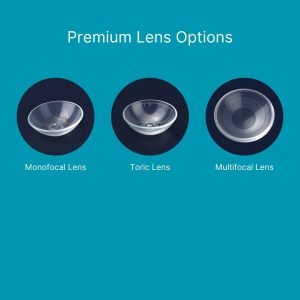
Always start off by asking yourself these three questions
- Would you like to reduce or eliminate your dependence on glasses?
- How often do you drive at night?
- Do you have astigmatism that needs correction?
The first type of lens on the list is the monofocal lens (Standard):
These lenses are made to focus light at a specific distance, mostly for far-distance vision. This means that if the patient decides to choose this, they would still require reading glasses to see in close proximity. This option is one of the most affordable ones on the market.
Most popular brands:
- AcrySof IQ
- Clareon
- Johnson & Johnson TECNIS 1-Piece Monofocal
- Bausch + Lomb enVista
How do these work?
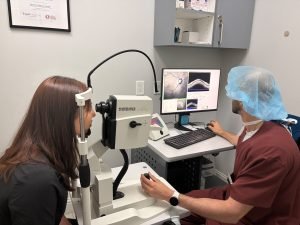
Before the surgery, the patient is called in for a pre-op visit, where the surgeon measures the natural curvature of the eye and asks the patient to choose between farsighted vision correction versus nearsighted vision correction (most choose to get rid of distance glasses, hence choosing farsighted vision, which requires a lens that allows the eye to see clearly at a single distance). This outpatient surgery takes about 10-15 minutes to perform, with about 30-45 minutes of waiting after the surgery to monitor early healing.
The patient would be given a few rounds of numbing and dilation drops before the surgery and then put on some mild sedatives for the duration of the surgery being performed. After the surgery, one might experience blurry vision, itchiness, a mild “foreign body” sensation, ultra-bright colors, mild bloodshot eyes, halos, and glare. The patient would initially be asked to wear a plastic shield to avoid any rubbing of the eye for the first few weeks.
The Second Type of lens For patients with astigmatism, toric lenses:
Once they choose these lenses, they will no longer need prescription glasses. This lens works by neutralizing the football-shaped cornea that causes the astigmatism, resulting in clear, sharp vision. Toric lenses can be paired with any other type of lens as a two-in-one combination that eliminates astigmatism and helps with the prescription at the same time to achieve the best possible result (monofocal toric, multifocal/trifocal toric, Extended Depth of Focus (EDOF) lens, etc.).
Most popular brands:
- Alcon Clareon Toric
- Johnson & Johnson Tecnis Toric II, Eyhance
- Bausch + Lomb enVista Toric
How do these work?
This outpatient surgery takes about 10 to 15 minutes. It is followed by about 30-45 minutes of waiting after the surgery to monitor early healing. So the total time spent at the hospital ranges from 2 to 3 hours. The patient would be put on some mild sedatives. After the surgery, the patient might present with blurry vision, itchiness, mild “foreign body” sensation, ultra-bright colors, spatial disorientation/mild dizziness, edge glare, and shadows. The patient would initially be asked to wear a plastic shield to avoid any rubbing of the eye for the first few weeks.
Another highly popular option is the Extended Depth of Focus (EDOF) Lenses:
They provide smooth intermediate-to-far distance vision, with practically no glare or halos in sight (something that multifocal lenses often cause). It is a particularly beneficial choice for individuals who tend to walk a lot, drive, and use the computer without glasses. Cons of EDOF lenses could be that patients would not be able to see or read clearly in dim light or have trouble reading small fonts up close. There might also be a risk of the eye healing a bit differently than expected. It may lead to uncorrected nearsightedness, farsightedness, or astigmatism, due to which you might still need thin prescription glasses to get the optimal vision.
Most popular brands:
- Alcon Clareon Vivity (or AcrySof IQ Vivity) (better for driving at night)
- Johnson & Johnson TECNIS Pure See (better for driving at night)
- Johnson & Johnson TECNIS Symfony (with OptiBlue & InteliLight)
How do these work?
This outpatient surgery takes about 10-20 minutes to perform, followed by about 30-45 minutes of waiting after the surgery to monitor early healing, with the total time spent at the hospital ranging from 2-3 hours. The patient would be put on some mild sedatives. After the surgery, the patient might present with blurry vision, itchiness, ultra-bright colors, mild halos, and waxy or “out of focus” transitions. The patient would initially be asked to wear a plastic shield to avoid any rubbing of the eye for the first few weeks.
Multifocal or Trifocal Lenses:
Also available are multifocal or trifocal lenses that are designed for both farsighted and nearsighted individuals: they can help you get rid of both your distance and reading glasses. With the pros being no glasses, the cons include glare or halos (with newer brands constantly improving on this factor) and side effects such as difficulty driving at night.
Most popular brands:
- Alcon Clareon PanOptix Pro (and the original AcrySof PanOptix)
- Bausch + Lomb enVista Envy
- Johnson & Johnson TECNIS Odyssey
How do these work?
This outpatient surgery takes about 10-20 minutes to perform. It is followed by about 30-45 minutes of waiting after the surgery to monitor early healing. So the total time spent at the hospital ranges from 2 to 3 hours. The patient would be put on some mild sedatives. After the surgery, the patient might present with blurry vision, itchiness, ultra-bright colors, mild halos, and reduced contrast in dim light. The patient would initially be asked to wear a plastic shield to avoid any rubbing of the eye for the first few weeks.
Light-Adjustable Lenses (LAL):
One sort of adjustable lens option would be Light-Adjustable Lenses (LAL). It lets you modify and tune how you would like your lens to work after the surgery has already been performed, instead of making a predetermined decision before your surgery even takes place. The surgeon would implant LAL during the surgery. After your eye heals, you could come back to the office to test your vision. It is where using UV rays, the doctor would be able to reshape your lens according to your exact preference.
Most popular brands:
- RxSight Light Adjustable Lens (LAL)
How do these work?
This outpatient surgery takes about 10-15 minutes to perform, followed by about 30-45 minutes of waiting after the surgery to monitor early healing. So, the total time spent at the hospital ranges from 2 to 3 hours. The patient would be put on some mild sedatives. After the surgery, the patient might present with itchiness, ultra-bright colors, mild halos, and temporary post-op blur. It is imperative for the patient to wear UV-blocking glasses, as the lenses are highly sensitive to ultraviolet (UV) rays. The patient would initially be asked to wear a plastic shield to avoid any rubbing of the eye for the first few weeks.
Lens and Estimated Costs
Monofocal IOL—Insurance covers surgery (with any patient responsible fees)
Astigmatism IOL—Insurance covers surgery (with any patient-responsible fees) + $1500
EDOF IOL—Insurance covers surgery (with any patient responsible fees) + $2000 (reflecting the entire premium cost, including the lens)
Multifocal IOL—Insurance covers surgery (with any patient-responsible fees) + $2000 (reflecting the entire premium cost, including lens)
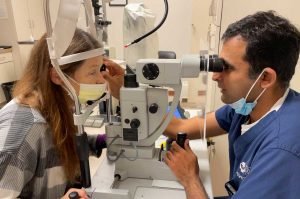
How can Texoma Retina near Allen Texas, help?
At Texoma Retina and Glaucoma, we offer the following approximate price points for our lenses. We strive to provide transparent pricing, which we feel is the best on the market for the expertise our physicians deliver. We offer cataract surgery for Collin, Grayson, and Fannin counties and all the areas they serve, including Sherman, Allen/McKinney, Plano, Frisco, Prosper, and Celina.