



What Causes Eye Floaters?
Eye floaters appear as small spots, black or gray specks, strings, or cobweb-like shapes that drift across your field of vision. When you try to look directly at them, they typically appear to drift away.
Most floaters are caused by age-related changes within the vitreous. It is the clear, jelly-like substance that fills the inside of your eyeball. As you age, this gel begins to liquefy and shrink. When this happens, the microscopic fibers in the vitreous clump together. These tiny clumps cast shadows onto your retina, and those shadows are what you perceive as floaters.
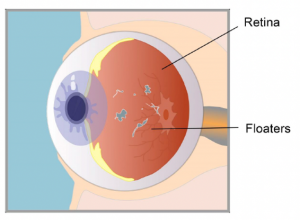
Common Causes of Eye Floaters
- Natural Aging Process: This is the most frequent cause of floaters.
- A Torn Retina: As the vitreous gel shrinks, it can tug on the retina with enough force to cause a tear. If left untreated, fluid can slip behind the tear, leading to a retinal detachment.
- Inflammation in the Back of the Eye: Conditions such as posterior uveitis (inflammation in the uvea layers at the back of the eye) can cause inflammatory debris to be released into the vitreous, appearing as new floaters. This can be caused by infection or autoimmune diseases.
- Bleeding in the Eye: Damage to retinal blood vessels—often caused by diabetes (diabetic retinopathy) or hypertension—can cause blood cells to leak into the vitreous gel, which are perceived as dark spots or streaks.
- Post-Cataract Surgery: Following cataract surgery, microscopic fragments of the natural lens capsule or cellular debris may occasionally remain suspended in the vitreous. It is normal for the body to gradually reabsorb this material naturally over time; it is not a life-threatening or sight-threatening issue. However, if the floaters persist or worsen, medical intervention may be required.
When are Floaters a Sign to See an Ophthalmologist?
While occasional, long-standing floaters are generally harmless, you should schedule a prompt evaluation with an ophthalmologist or retina specialist if you notice:
- A sudden, noticeable increase in the number of floaters.
- The appearance of many more floaters than you usually experience.
Critical Warning Signs (Emergency Protocol)
If you experience any of the following symptoms alongside new floaters, proceed directly to the nearest hospital emergency room or contact your ophthalmologist or an eye clinic immediately.
- Flashes of light in the same eye as the new floaters.
- A dark, curtain-like shadow descending over any part of your vision.
- A sudden loss of peripheral (side) vision.
These combination symptoms are primary indicators of a retinal tear or detachment, which requires immediate emergency intervention to prevent permanent vision loss.
Who is most likely to get eye floaters?
Eye floaters are a normal part of aging, but some people are more likely to have them due to dangerous retinal conditions. You may have a higher chance if:
- Are more than 50 years old
- Are very nearsighted (have high myopia)
- If you have diabetes or blindness caused by diabetes
- Had an accident or trauma to their eyes
- Surgery to remove cataracts
- Have had eye tears or detachments in the past
- Had swelling inside the eye (uveitis)
People with these risk factors should see a retina specialist for regular full eye exams to check on the health of their retinas.
How Are Eye Floaters Diagnosed?
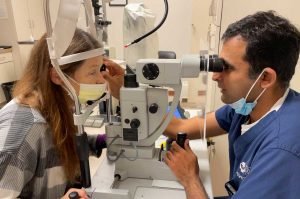
If you have floaters that are getting worse or new, your eye doctor will do a full dilated eye test to see if the floaters are harmless or if there is a problem with the retina.
Your review could include the following:
- dilated eye exam
- The OCT scan
- Wide-field image of the retina
- Ultrasound of the eye (if the retina can’t be seen properly)
These advanced diagnostic tests help find conditions that could damage or destroy your sight, such as diabetic eye disease, vitreous bleeding, retinal tears, and retinal detachment.
How Can Eye Floaters Be Treated?
Most eye floaters that come with getting older get less obvious over time and don’t need to be treated. Floaters may need treatment, though, if they are caused by a problem with the eye.
Treatment choices may include the following, depending on the diagnosis:
-
- Laser treatment for retinal tears
- Treatment for diabetic retinopathy
- Retinal detachment surgery
- Anti-VEGF eye injections for retinal diseases
Quick treatment can help keep your eyesight and stop damage to the retina that won’t go away.

Improved Expert Care for Your Vision
If you notice new or worsening eye floaters, don’t dismiss the symptoms. At Texoma Retina and Glaucoma, the team has expertise in all aspects of diagnosis and eye floater treatment in Texas using state-of-the-art retinal imaging and customized treatment regimens. Whether your symptoms are due to natural aging, a retinal tear, or other retinal disease, our doctors are dedicated to preserving your vision with timely, competent care.
We are a trusted retina specialist in Sherman, TX, specializing in the treatment of eye floaters, flashes, and retinal tears. We also treat retinal detachment, diabetic retinopathy, and macular degeneration. If you’re looking for an eye floaters specialist, a retina doctor in Sherman, TX, or a retina specialist near me, our staff is happy to provide care to individuals in Sherman, Denison, Texoma, North Texas, and Southern Oklahoma. Getting an eye health check early can uncover major eye problems before they cause irreversible damage to your vision and give you the greatest chance to retain your eyesight.